
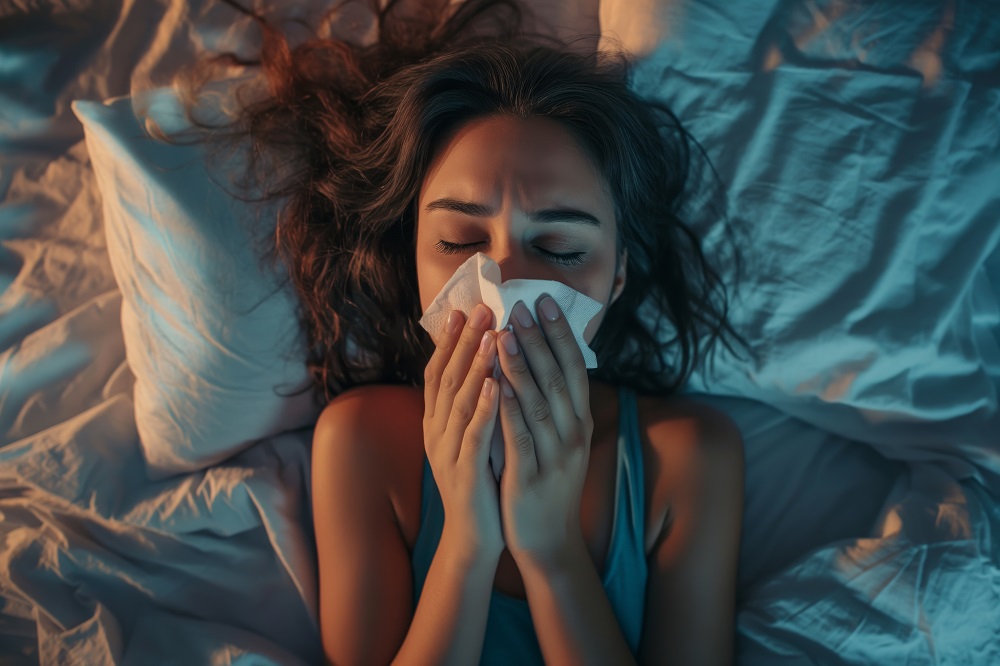
Nighttime coughing can be frustrating and exhausting, especially when it keeps recurring. For many individuals, coughing causes disturbance at night. Understanding why a cough worsens and ways to stop coughing at night can help you find lasting relief.
According to respiratory health reviews, chronic cough remains one of the most common reasons adults seek urgent and primary care, particularly when symptoms worsen at night. This guide explains the causes of cough, clinically proven remedies for cough, and more.
Why Coughing Gets Worse at Night
Many patients notice their cough is manageable during the day and becomes intense at night. This happens because of common nighttime changes in the body. It can aggravate airway irritation. Common reasons for coughing at night include:
Post-nasal drip at night: Mucus from allergies, sinus infections, or colds pools in the throat when lying down, triggering the cough reflex.
Acid reflux cough at night: Stomach acid can travel upward while sleeping, irritating the throat and airways.
Nocturnal asthma cough: Airway inflammation and narrowing worsen at night, often causing dry cough, wheezing, or chest tightness.
Allergies causing night cough: Dust mites, pet dander, and mold in bedding or bedrooms can provoke coughing.
Cold air exposure: Breathing cold, dry air can irritate sensitive airways and trigger coughing.
Common Causes of Cough at Night
Identifying the type of cough helps determine the most effective treatment. Both dryness and cough can interfere with sleep.
Dry Cough
A dry cough produces no mucus and is often linked to:
- Acid reflux Asthma
- Post-viral airway irritation
- Environmental irritants
Wet Cough
A wet cough at night brings up mucus and is commonly associated with:
- Chest congestion at night
- Respiratory infections
- Bronchitis
- Excess mucus in the throat at night
Ways to Stop Coughing at Night: Fast Relief Tips
These night cough remedies focus on reducing airway irritation, thinning mucus, and minimizing triggers before sleep.
Stay Hydrated
Drinking enough fluids throughout the day helps thin mucus, making it easier to clear and reducing nighttime coughing.
Drink Herbal Tea with Honey and Lemon
Warm liquids soothe a sore throat, while honey coats the airways and reduces cough sensitivity. Honey has been shown to improve nighttime cough symptoms in both adults and children over one year old.
Have A Steamy Shower
Steam loosens mucus in the chest and nasal passages, helping relieve chest congestion at night and post-nasal drip.
Try Over-the-Counter Medications
Depending on symptoms, cough suppressants may help. Choosing the right cough medicine for a night cough depends on the type of cough.
Take an Antihistamine
For allergies causing night cough, antihistamines can reduce mucus production and airway irritation, especially when symptoms worsen indoors.
Use Nasal Saline Rinses
Saline rinses flush allergens from the nasal passages and reduce mucus in the throat at night.
Avoid Use of Strong Scents Before Bedtime
Perfumes, candles, and cleaning products can irritate the airways and worsen nighttime coughing, particularly in sensitive individuals.
Lie With Your Head Raised
Sleeping with your head elevated helps prevent acid reflux cough at night and reduces mucus pooling in the throat.
Reduce Allergens in Your House
Wash bedding regularly, use allergen-proof covers, and vacuum frequently to reduce allergens that contribute to nighttime coughing.
Use Ginger to Reduce Inflammation
Ginger has natural anti-inflammatory properties that may help calm airway irritation when consumed or added to meals.
Add Prebiotics to Your Diet
Emerging research suggests gut health may influence immune and inflammatory responses, potentially supporting respiratory health in people with chronic cough.
Relief Tips Based on Type of Cough
Not all nighttime coughs respond to the same treatment. That’s why identifying the underlying cause is essential for effective relief. A persistent night cough may have multiple causes, each requiring a different approach, including Minor Illness Treatment. Let’s explore how relief strategies vary by cough type to reduce nighttime symptoms and improve sleep quality
Dry Cough at Night
Often linked to asthma, reflux, or airway irritation. Focus on humidified air, throat-soothing remedies, and reflux control.
Wet/Phlegm Cough
A wet cough at night usually involves mucus from infections or chest congestion. Hydration, steam, and expectorants are most helpful.
Cough From Allergies
Allergies that cause nighttime cough respond well to antihistamines, nasal saline, and environmental control of allergens.
Cough From Asthma
A nocturnal asthma cough often worsens between midnight and early morning. Proper inhaler use and trigger avoidance are essential.
Cough From Acid Reflux
Acid reflux cough at night can be improved by avoiding late meals, elevating the head, and managing reflux triggers.
Natural Home Remedies to Help You Sleep Better While Coughing
- Drink warm fluids before bedtime (ginger tea, turmeric milk)
- Herbal teas (peppermint, chamomile)
- Warm water with lemon
- Humidified bedroom environment
- Take a warm shower
- Elevated sleep position
Final Thoughts
When coughing regularly disrupts sleep, worsens over time, or occurs with shortness of breath, chest pain, or fever, medical evaluation is essential. At Concur Care Urgent, our providers regularly treat patients with night cough, chest congestion, and related respiratory concerns. Early assessment helps determine whether the cause is asthma, reflux, infection, or another condition.
FAQs
Q1. Why do I cough only at night?
Ans: Lying down allows mucus, acid, and airway inflammation to worsen, triggering coughing during sleep.
Q2. How to sleep with a cough?
Ans: To sleep better with a cough, keep your head elevated, stay hydrated, use a humidifier, and address triggers like allergies causing night cough or acid reflux before bedtime.
Q3. Best position to sleep with a cough?
Ans: The best position to sleep with a cough is on your back with your head raised or on your side, which helps reduce chest congestion at night and post-nasal drip.
Q4. How to stop coughing fits at night?
Ans: To stop coughing fits at night, sip warm fluids, use honey (for adults and children over one), try cough medicine for night cough if appropriate, and reduce airway irritants.
Q5. When to see a doctor for a cough?
Ans: A cough lasting longer than three weeks, especially if worse at night, should be medically evaluated.
Q6. Can cold air cause coughing at night?
Ans: Yes. Cold, dry air can irritate sensitive airways and worsen nighttime cough.
Q7. Is nighttime cough common in kids?
Ans: Yes. Nighttime cough in kids often results from post-nasal drip, asthma, or viral infections.