
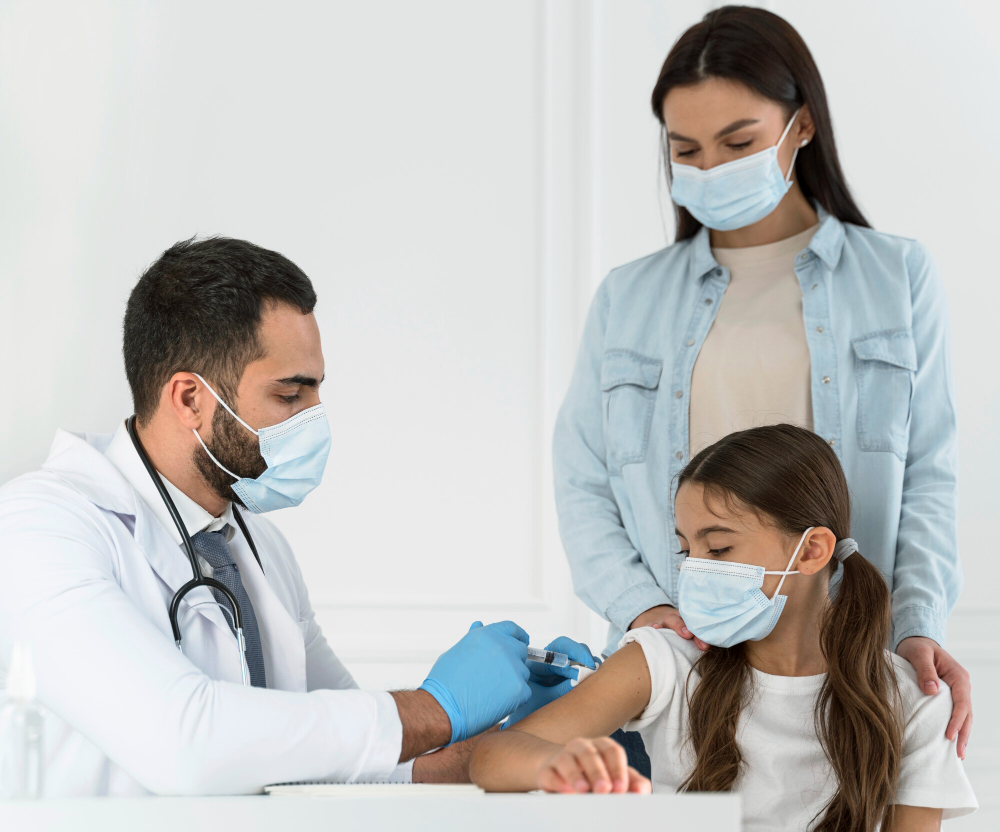
Back-to-school season brings a familiar checklist: school supplies, new clothes, physicals, sports forms, and updated medical records. For parents, there is another important item to check before the first day of class: vaccinations.
Children receive different vaccines at different ages, and some immunizations are specifically required for school attendance. Requirements can also vary based on the child’s age, grade, state, and vaccination history.
If you live in Georgia, reviewing your child’s vaccination schedule before school starts can help you identify missing doses, complete catch-up vaccinations, and make sure the required school documentation is ready.
For families in Johns Creek, Norcross, Duluth, Suwanee, Alpharetta, and surrounding communities, Concur Urgent Care provides childhood vaccinations and school immunization services, making it easier to take care of these requirements before the back-to-school rush.
Quick Answer: What Vaccines Does My Child Need for School?
The vaccines a child needs depend on their age, previous vaccination history, and state requirements. In Georgia, children attending childcare, pre-K, Head Start, nursery programs, or school through 12th grade generally need a Georgia Certificate of Immunization, Form 3231, on file.
Common childhood immunizations include vaccines against:
- Hepatitis B
- Rotavirus
- Diphtheria, tetanus, and pertussis
- Polio
- Haemophilus influenzae type b (Hib)
- Pneumococcal disease
- Measles, mumps, and rubella (MMR)
- Chickenpox (varicella)
- Hepatitis A
- Human papillomavirus (HPV)
- Meningococcal disease
- Influenza
Georgia also has specific requirements for students entering certain grades. Students entering 7th grade generally need documentation of Tdap and meningococcal conjugate vaccination. Students entering 11th grade generally need a meningococcal conjugate booster unless their first dose was given at age 16 or later.
Because school requirements and medical recommendations are not always identical, parents should review both the current vaccination schedule for children and their school’s requirements.
Vaccination Schedule vs. School Vaccine Requirements: What Is the Difference?
These terms are related, but they mean different things.
A vaccination schedule is a recommended timeline that explains which vaccines children typically receive at different ages. The CDC’s (Centers for Disease Control and Prevention) child and adolescent schedule also provides catch-up guidance for children who start late or fall behind.
School vaccine requirements, on the other hand, are rules established by the state or other applicable authorities for school attendance.
That means a vaccine can be recommended for a child’s health without being required for school enrollment in every state or grade.
Parents should therefore ask two separate questions:
- Which vaccines are recommended for my child’s age and health history?
- Which vaccines and documents are required for my child to attend school?
Looking at both helps provide a more complete picture of a child’s immunization needs.
What Is the Recommended Vaccination Schedule for Children?
The CDC’s recommended childhood immunization schedule is organized around age and previous vaccination history. It is designed to provide protection when children are most likely to benefit from each vaccine.
The exact timing can vary depending on the vaccine and the child’s circumstances.
Infancy and Early Childhood
During the first years of life, children may receive vaccines protecting against diseases such as:
- Hepatitis B
- Rotavirus
- Diphtheria, tetanus, and pertussis
- Polio
- Hib
- Pneumococcal disease
- Measles, mumps, and rubella
- Chickenpox
- Hepatitis A
Some vaccines require multiple doses because protection is built over a series. Others include booster doses later in childhood.
The CDC schedule should be used alongside the child’s individual medical and vaccination history rather than as a substitute for personalized medical advice.
Pre school and Early School Years
Around the preschool years, children receive additional doses of certain vaccines to maintain protection.
This is also a useful time for parents to review their child’s records before kindergarten or another school transition.
If a child has missed a recommended vaccine, a healthcare professional can determine whether catch-up vaccination is appropriate.
Preteen Years
The preteen years are another important milestone for childhood immunizations.
At around 11-12 years of age, routine recommendations include Tdap, meningococcal vaccination, and HPV vaccination. Georgia specifically requires Tdap and meningococcal vaccination for students entering 7th grade.
Teen Years
Adolescents may need additional doses or boosters based on their previous vaccination history.
For Georgia students entering 11th grade, a meningococcal conjugate booster is generally required unless the first dose was administered on or after the student’s 16th birthday.
What Are the School Vaccine Requirements in Georgia?
Georgia has specific immunization requirements for children attending school and childcare programs.
The Georgia Department of Public Health states that children attending childcare facilities, pre-K, Head Start, nursery programs, or school must have a Georgia Certificate of Immunization, Form 3231, on file through 12th grade.
Georgia 7th Grade Vaccine Requirements
Students entering 7th grade, as well as students who are new entrants into a Georgia school in grades 8 through 12, generally need:
- One dose of Tdap vaccine
- One dose of meningococcal conjugate vaccine
These vaccinations must be documented appropriately on the Georgia immunization certificate.
The Tdap vaccine helps protect against tetanus, diphtheria, and pertussis, while meningococcal vaccination protects against certain types of meningococcal disease.
Georgia 11th Grade Vaccine Requirements
Students entering or transferring into 11th grade generally need proof of a meningococcal conjugate booster.
There is an exception when the student received their first meningococcal conjugate dose on or after their 16th birthday.
Parents of rising 11th graders should check the child’s vaccination record early rather than waiting until school registration.
Which Childhood Immunizations Are Recommended but May Not Be School Requirements?
School requirements do not include every vaccine recommended as part of routine preventive care.
For example, Georgia DPH highlights annual influenza vaccination and HPV vaccination as recommended for children and adolescents, even though they are not listed as Georgia school-entry requirements in the same way as the 7th- and 11th-grade vaccines.
Other routine childhood immunizations may also be recommended based on age and individual circumstances.
What If My Child Is Behind on the Vaccination Schedule?
Parents sometimes discover that their child has missed one or more recommended vaccines. This can happen after moving, changing healthcare providers, missing appointments, or simply losing track of an increasingly complicated schedule.
The good news is that falling behind does not automatically mean starting over.
The CDC provides catch-up schedules for children and adolescents who start vaccinations late or are more than a month behind. In general, a vaccine series does not need to be restarted simply because a longer period has passed between doses.
A healthcare professional can review:
- Your child’s age
- Previous vaccine dates
- Which vaccines were given
- Number of doses received
- Time between doses
- Current school requirements
- Any relevant health considerations
The provider can then determine which vaccines are due and when they should be given.
For families who need to catch up before school starts, Concur Urgent Care offers childhood vaccinations and school immunization services in Johns Creek and Norcross.
What If You Cannot Find Your Child’s Vaccination Records?
Missing immunization records can make back-to-school preparation stressful, but there are several places parents can look.
Start with your child’s current and previous healthcare providers. You can also check with previous schools or childcare facilities and contact the appropriate public health department.
Georgia DPH recommends several options for locating old immunization information, including contacting the county health department where vaccines were administered, checking with previous providers or schools, and considering serology testing in appropriate circumstances.
If records remain unavailable, speak with a healthcare professional before assuming your child needs every vaccine again.
What Is Georgia Form 3231?
Form 3231 is the Georgia Certificate of Immunization. It documents whether a child meets applicable immunization requirements for school or childcare attendance.
Georgia requires this certificate for children attending childcare, pre-K, Head Start, nursery programs, and schools through 12th grade.
If a child is still completing required vaccinations, the certificate may have an expiration date and may need to be updated as additional doses are received. Georgia DPH explains that once a certificate is designated “Complete for School,” additional certificates are generally not required every time a child receives another vaccine.
Parents should check their school’s current instructions for submitting documentation.
When Should You Check Your Child’s Vaccination Schedule?
Ideally, start reviewing your child’s records several weeks before school begins.
This gives your family time to:
- Find missing records
- Identify upcoming vaccines
- Schedule a vaccination visit
- Complete catch-up doses when appropriate
- Obtain or update required documentation
- Address questions about school requirements
Waiting until the last week of summer can make the process more difficult, especially if a child needs multiple doses with specific intervals between them.
A Simple Back-to-School Timeline
4-8 weeks before school: Review your child’s vaccination records and current school requirements.
2-4 weeks before school: Schedule vaccines that are due and ask about catch-up vaccination if necessary.
1-2 weeks before school: Confirm that Form 3231 or other required documentation is complete.
Before the first day: Submit all required records to the school and keep a copy for your files.
Can Kids Get Vaccines at a Walk-In Urgent Care?
Yes, some urgent care centers provide routine childhood vaccinations and school immunizations.
A walk-in urgent care can be a convenient option for families who need vaccination services outside traditional primary care appointment times. However, vaccine availability varies by clinic, so parents should confirm that the specific vaccine their child needs is available before visiting.
Concur Urgent Care offers walk-in care as well as vaccination and immunization services at its Johns Creek and Norcross locations. Its vaccination services include routine childhood vaccines such as MMR, polio, hepatitis A and B, varicella, and DTaP, along with school and work immunizations.
This can be particularly helpful for parents searching online for where to get vaccines near me while preparing for the upcoming school year.
Where to Get Vaccines Near Me in Johns Creek and Norcross
Parents searching for where to get vaccines nearby have several options, including pediatricians, primary care practices, public health departments, and urgent care centers.
Concur Urgent Care provides vaccination services for children, adults, and travelers at its Johns Creek and Norcross clinics. The clinic also provides school and work immunizations.
For parents in the surrounding communities, Concur serves patients from areas including Duluth, Suwanee, Alpharetta, and nearby parts of Fulton and Gwinnett counties.
Before visiting, parents can contact the clinic to confirm vaccine availability and discuss their child’s specific needs.
What Vaccines Are Available at Concur Urgent Care?
Concur Urgent Care currently lists several routine childhood vaccines among its immunization services, including:
- MMR
- Polio
- Hepatitis A
- Hepatitis B
- Varicella
- DTaP
The clinic also provides other immunizations for adults and travelers, including influenza and travel-related vaccines.
Because vaccine availability can change, parents should contact Concur before their visit to confirm that the specific vaccine required for their child is available.
What Should Parents Bring to a Vaccine Appointment?
Bring your child’s available vaccination records whenever possible.
It can also help to bring:
- School immunization requirements
- Form 3231, if already issued
- Insurance information
- Identification
- Information about previous vaccine reactions
- Relevant medical information
- A list of current medications, if applicable
Having the available records allows the healthcare team to determine which doses have already been documented and what may still be needed.
Are Childhood Vaccines Safe?
Vaccines undergo extensive evaluation before approval and continue to be monitored after they are introduced.
Most vaccine side effects are mild and temporary, such as soreness where the shot was given, fatigue, or a low-grade fever. Serious reactions are uncommon.
Parents should tell the healthcare professional about any previous serious allergic reactions or other relevant medical concerns before vaccination. The provider can determine whether a vaccine is appropriate and answer questions about expected side effects.
Can Children Receive More Than One Vaccine at the Same Visit?
In many circumstances, children can receive multiple vaccines during the same healthcare visit.
This can be useful when a child is catching up on missed vaccinations or needs several vaccines before meeting school requirements.
The appropriate combination and timing depend on the child’s age, vaccination history, and current recommendations. A healthcare professional can determine which vaccines should be given and when.
What Happens If a Child Misses a School Immunization Requirement?
If your child has not completed a required immunization, contact the school and a healthcare provider as soon as possible.
The next step depends on the vaccine, the child’s previous vaccination history, and Georgia’s current requirements.
Some children may be able to follow a catch-up schedule while completing the required vaccinations. Georgia DPH encourages parents to work with healthcare providers to catch up on late immunizations.
Starting early gives families more time to address missing doses and documentation before the first day of school.
Back-to-School Vaccination Checklist for Parents
Use this quick checklist before your child returns to class:
- Find your child’s most recent vaccination record.
- Review the current vaccination schedule for children based on your child’s age.
- Check your school’s current immunization requirements.
- Look specifically for grade-level requirements.
- Check whether your child needs Tdap or meningococcal vaccination.
- Ask about catch-up vaccination if your child is behind.
- Confirm whether Form 3231 needs to be updated.
- Schedule needed vaccinations early.
- Confirm vaccine availability before visiting a walk-in urgent care.
- Keep a personal copy of your child’s updated records.
Prepare Your Child for a Healthy School Year
Getting children ready for school involves more than buying supplies and completing enrollment forms. Staying current with childhood immunizations is an important part of preventive healthcare and school preparation.
Start by reviewing your child’s vaccination schedule, then compare their records with the current school vaccine requirements for their grade and location. If a vaccine is overdue, a healthcare professional can help determine an appropriate catch-up plan.
For families looking for where to get vaccines near me in Johns Creek, Norcross, and surrounding communities, Concur Urgent Care offers childhood vaccinations and school immunization services, along with convenient walk-in urgent care options.
FAQs
Q1. What is a vaccination schedule for children?
Ans. It is an age-based plan showing which vaccines children typically need, when doses are given, and how catch-up vaccination can be handled if doses are delayed.
Q2. What vaccines are required for school in Georgia?
Ans. Georgia requires specific immunizations and Form 3231 documentation. Requirements vary by age and grade, with additional Tdap and meningococcal requirements for certain students.
Q3. Does Georgia require Tdap for 7th grade?
Ans. Yes. Students entering 7th grade generally need documentation of one Tdap dose and one meningococcal conjugate vaccine dose.
Q4. Do 11th graders need a meningococcal booster?
Ans. Generally, yes. Georgia requires a meningococcal conjugate booster for entering 11th graders unless their first dose was given at age 16 or later.
Q5. What is Form 3231?
Ans. Form 3231 is Georgia’s Certificate of Immunization used to document that a child meets applicable immunization requirements for school or childcare attendance.
Q6. What if my child missed a vaccine?
Ans. A healthcare professional can review the vaccination record and determine an appropriate catch-up schedule. Vaccine series generally do not need restarting because of delays.
Q7. Can my child get vaccines at urgent care?
Ans. Some urgent care centers provide childhood vaccinations and school immunizations. Confirm that the specific vaccine your child needs is available before visiting.
Q8. Where can I get vaccines near me?
Ans. Vaccines may be available through pediatricians, primary care offices, health departments, vaccination clinics, and participating urgent care centers.
Q9. Can children get multiple vaccines during one visit?
Ans. Multiple vaccines can often be administered during one visit when appropriate. A healthcare professional can determine the right combination and timing for your child.
Q10. Should I keep a copy of my child’s vaccine records?
Ans. Yes. Keeping a personal copy makes it easier to manage school enrollment, future healthcare visits, travel, college requirements, and other situations requiring immunization documentation.